
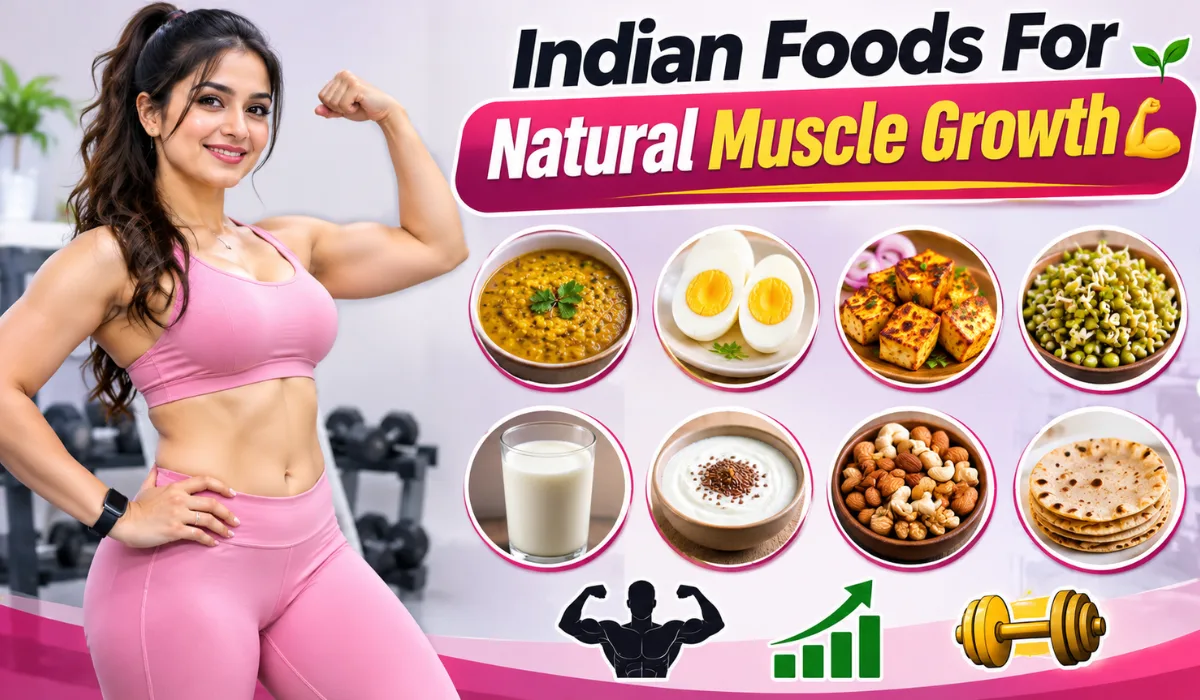
Building strong muscles does not require expensive imported supplements or bland boiled meals. Traditional Indian kitchens already hold some of the most powerful, nutrient-dense ingredients on the planet. When combined correctly, Indian Foods For Natural Muscle Growth deliver complete amino acids, slow-digesting complex carbohydrates, and healthy fats that fuel heavy workouts and speed up recovery. Many fitness beginners struggle to see changes in the mirror even after lifting weights for months. The real reason usually sits on the dinner plate rather than inside the gym. A standard Indian meal often leans heavily on white rice, wheat rotis, and potatoes, leaving the body starved of the building blocks needed to repair torn muscle fibers. Learning how to balance traditional spices, lentils, dairy, and lean meats transforms everyday home cooking into a muscle-building powerhouse. Whether following a strict plant-based lifestyle or eating eggs and poultry, smart food choices unlock steady strength gains without breaking the bank.
Why Traditional Indian Kitchens Hold the Secret to Lean Muscle
For centuries, Indian wrestlers—known as pehlwans—built massive, functional strength using pure whole foods from local farms. They did not rely on synthetic powders or processed snacks. Instead, they mastered the art of pairing dairy, legumes, nuts, and whole grains to maximize nutrient absorption. Modern sports science now confirms what traditional wisdom practiced all along. Combining different plant foods—like lentils with rice or chickpeas with whole wheat—creates a complete amino acid profile that rivals meat. Furthermore, everyday Indian spices like turmeric, ginger, black pepper, and fenugreek reduce post-workout inflammation and keep digestion running smoothly.
"You cannot out-train a low-protein diet. Traditional Indian staples like soya chunks, low-fat paneer, and sprouted pulses give lifters everything needed to trigger muscle protein synthesis naturally, provided portion sizes are adjusted to prioritize protein over excess refined carbs." — Dr. Rakesh Sharma, Sports Nutritionist & Certified Strength Coach
How Much Protein Is Needed for Natural Muscle Growth?
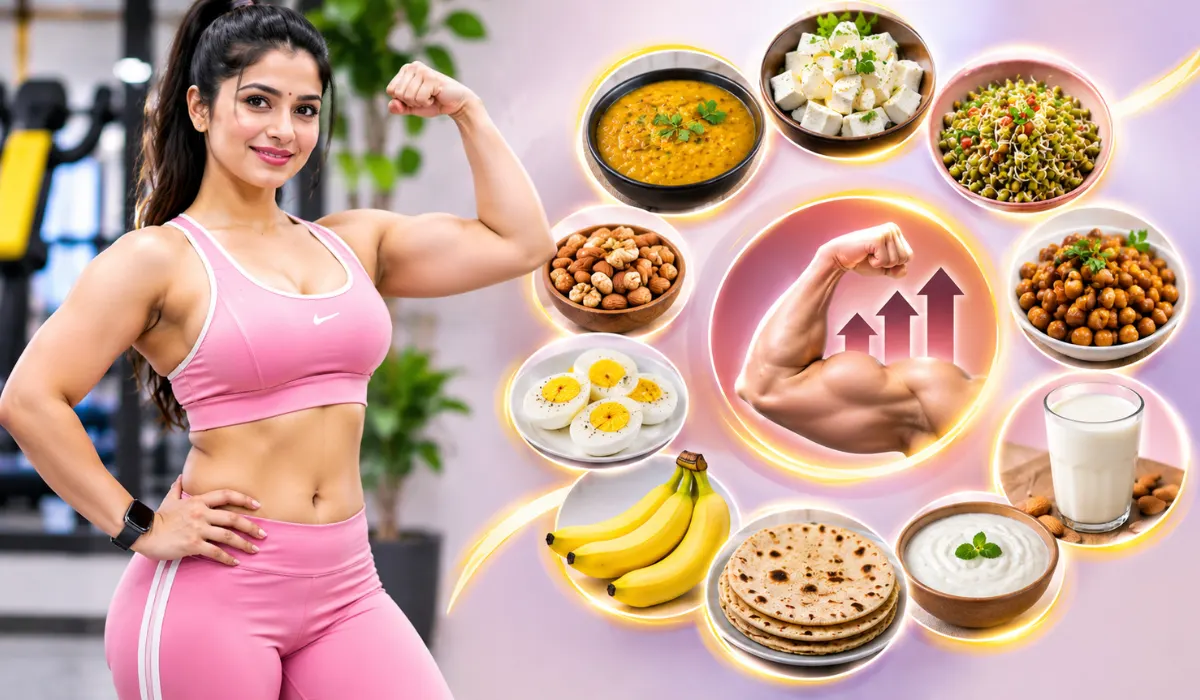
Understanding exact daily targets removes all guesswork from meal planning. While a sedentary adult only needs a small baseline amount of protein to stay healthy, lifting weights breaks down muscle tissue and demands much higher intake to rebuild it bigger and stronger. Current sports nutrition research shows that individuals aiming for hypertrophy should consume between 1.6 to 2.2 grams of protein per kilogram of body weight every day.
- Beginners (under 1 year of lifting): Aim for 1.6 grams per kg. A 65 kg beginner needs roughly 104 grams of protein daily.
- Intermediate lifters (1 to 3 years of lifting): Aim for 1.8 to 2.0 grams per kg. A 75 kg lifter needs between 135 and 150 grams daily.
- Vegetarians and vegans: Aim toward the upper end (2.0 to 2.2 grams per kg) because plant proteins digest slightly slower and have lower bioavailability than animal sources.
Spreading this total across four to five meals ensures a steady stream of amino acids in the bloodstream. Eating 25 to 35 grams of protein per meal maximizes muscle repair throughout the entire day.
Read Also: Best Pilates Workout Routine For Indian Women at Home
What Are the Best Indian Foods for Natural Muscle Growth?
Selecting the right ingredients makes hitting daily macro targets simple and delicious. Below is a breakdown of the Top 10 Indian Foods For Natural Muscle Growth, ranked by protein density, bioavailability, and ease of preparation.
1. Soya Chunks (Meal Maker) — The Plant-Based Protein King
Soya chunks sit at the absolute top of vegetarian muscle-building foods. Made from defatted soy flour, they pack an astonishing 52 grams of protein per 100 grams of dry weight. Even a modest 50-gram serving delivers 26 grams of complete protein—matching a standard chicken breast. Boiling them with ginger, garlic, and garam masala turns them into a tender, flavorful curry or stir-fry.
2. Chicken Breast — Lean Animal Protein for Fast Recovery
For non-vegetarians, boneless, skinless chicken breast remains the gold standard for protein-rich Indian meals for lean muscle growth. A 100-gram cooked portion provides 31 grams of high-bioavailability protein with minimal fat. Marinating chicken in hung curd, lemon juice, turmeric, and tandoori spices keeps the meat juicy without adding heavy cream or butter.
3. Whole Eggs and Egg Whites — Nature’s Multivitamin
Eggs contain every essential amino acid in the exact ratio the human body needs. One large whole egg provides roughly 6 grams of protein alongside healthy fats, vitamin D, and choline, which supports brain-to-muscle nerve signaling. Combining two whole eggs with four egg whites creates a massive 26-gram protein meal with controlled calories.
4. Low-Fat Paneer (Cottage Cheese) — Slow-Digesting Casein Power
Dairy-based Indian foods for muscle development shine brightest with homemade paneer. Low-fat paneer offers roughly 18 grams of protein per 100 grams. Because paneer is rich in casein protein, it digests slowly over several hours, making it ideal for preventing muscle breakdown overnight.
5. Greek Yogurt and Hung Curd (Chakka Dahi)
Regular homemade curd contains around 3.5 grams of protein per 100 grams. Straining the excess whey water through a muslin cloth transforms regular dahi into thick hung curd or Greek yogurt, boosting the protein concentration to 10 grams per 100 grams. It also delivers gut-friendly probiotics that improve nutrient absorption.
6. Sprouted Moong Dal — Bioavailable Lentil Energy
Dry moong dal carries 24 grams of protein per 100 grams, and sprouting the whole green beans unlocks even greater nutritional value. Germination breaks down anti-nutrients like phytic acid, making the protein, iron, and B-vitamins far easier for the stomach to digest without bloating.
7. Roasted Chana and Sattu (Roasted Bengal Gram)
Often called the "poor man’s protein" in northern India, sattu is ground roasted chana packed with 20 to 22 grams of protein per 100 grams, plus high fiber and iron. Mixing three tablespoons of sattu into cold water with roasted cumin, black salt, and lemon juice creates an instant, refreshing post-workout recovery drink.
8. Rajma (Red Kidney Beans) and Kabuli Chana (Chickpeas)
Hearty legumes form the backbone of high protein Indian foods for muscle building. Both rajma and chickpeas offer roughly 22 to 24 grams of protein per 100 grams dry weight alongside slow-burning complex carbohydrates. Soaking them overnight and pressure-cooking with ginger and asafoetida (hing) ensures smooth digestion.
9. Rohu, Pomfret, and Indian Mackerel (Bangda)
Freshwater and coastal Indian fish deliver 19 to 24 grams of protein per 100 grams cooked, paired with potent omega-3 fatty acids. Omega-3 fats reduce joint soreness after heavy squats or deadlifts and improve insulin sensitivity, helping muscles absorb carbohydrates more efficiently.
10. Peanuts, Almonds, and Pumpkin Seeds
Skinny lifters who struggle to gain weight need calorie-dense whole foods. Roasted peanuts pack 26 grams of protein per 100 grams, while pumpkin seeds add 19 grams along with zinc and magnesium—two critical minerals for natural testosterone production and deep sleep.
| Indian Food Item (100g) | Protein Content | Primary Macronutrient Type | Best Time to Consume |
| Soya Chunks (Dry) | 52g | Complete Plant Protein + Fiber | Lunch or Post-Workout |
| Chicken Breast (Cooked) | 31g | Lean Complete Animal Protein | Lunch or Dinner |
| Roasted Peanuts | 26g | Healthy Fats + Plant Protein | Evening Snack |
| Moong Dal (Dry) | 24g | Plant Protein + Complex Carbs | Lunch or Breakfast (Cheela) |
| Sattu Flour | 22g | Plant Protein + Slow Carbs | Pre-Workout or Mid-Morning |
| Rohu Fish (Cooked) | 19g | Lean Protein + Omega-3 Fats | Dinner |
| Low-Fat Paneer | 18g | Slow-Digesting Casein + Fats | Dinner or Before Bed |
| Whole Eggs (2 Large) | 12g | Complete Protein + Micronutrients | Breakfast or Post-Workout |
| Hung Curd / Greek Dahi | 10g | Fast & Slow Dairy Protein | Breakfast or With Lunch |
Read Also: Six Pack Abs Workout Routine At Home: Get Stronger and Leaner
Why Should Vegetarians Eat Protein-Rich Indian Foods?
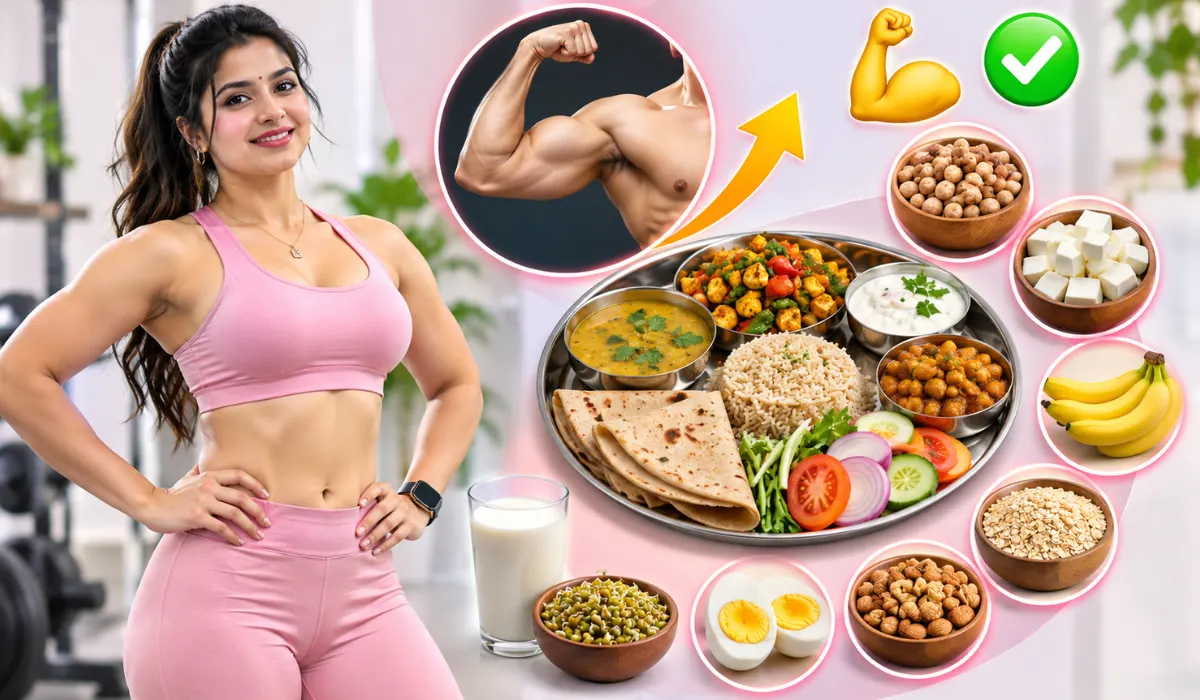
Many people mistakenly believe that building an athletic, muscular physique requires eating meat every day. In reality, Indian Foods For Natural Muscle Growth offer extraordinary plant-based variety that supports full muscle hypertrophy when planned with intention.
The biggest trap in a traditional vegetarian household is relying too heavily on low-protein staples. A standard plate with three wheat rotis, a bowl of watery dal, and potato sabzi provides barely 12 to 15 grams of protein alongside over 80 grams of carbohydrates. Over time, this imbalance leads to stubborn belly fat rather than firm muscle tone.
Mastering Amino Acid Pairing
Plant proteins often lack one or two essential amino acids—for example, lentils are low in methionine, while grains like rice and wheat are low in lysine. Eating them together solves this problem completely.
- Dal + Brown Rice (Dal Chawal): Combines legumes and grains into a complete protein source.
- Rajma + Whole Wheat Roti: Delivers sustained energy and full amino acid coverage.
- Besan (Chickpea Flour) + Curd: Pairs legume protein with dairy casein for superior muscle repair.
"Vegetarians do not fail to build muscle because plant protein is weak; they fail because they eat too little of it. Simply swapping half the rice on your plate for 50 grams of soya chunks or 100 grams of low-fat paneer doubles your daily protein intake overnight." — Ananya Deshmukh, Clinical & Sports Dietitian
Best Meal Timing: High Protein Indian Breakfast, Lunch, and Dinner
Structuring meals around training schedules maximizes energy in the gym and speeds up tissue repair afterward. Focusing on Indian Foods For Natural Muscle Growth at each main meal prevents afternoon energy crashes and late-night junk food cravings.
High Protein Indian Breakfast for Muscle Growth
After eight hours of overnight fasting, muscles wake up hungry for amino acids. Skipping breakfast or eating only tea and biscuits stalls progress. A protein-rich Indian breakfast for gym enthusiasts should deliver at least 25 to 30 grams of protein.
- Paneer Stuffed Moong Dal Cheela: Blend soaked yellow moong dal into a smooth batter, cook like a crisp crepe, and stuff with 80 grams of spiced crumbled paneer.
- Masala Egg Bhurji with Multigrain Toast: Scramble two whole eggs and four egg whites with onions, tomatoes, green chilies, and turmeric.
- Sattu and Oats Savory Porridge: Cook rolled oats with vegetables and stir in three tablespoons of sattu powder and a bowl of thick curd on the side.
High Calorie Indian Foods for Healthy Muscle Gain
Hardgainers—individuals with fast metabolisms who struggle to put on weight—need a clean calorie surplus of 300 to 500 calories above maintenance. Instead of eating oily street food or sugary sweets, rely on nutrient-dense high calorie Indian foods for healthy muscle gain.
- Banana Peanut Butter Sattu Shake: Blend 300ml full-fat milk, one ripe banana, two tablespoons of natural peanut butter, 30 grams of sattu, and a pinch of cinnamon for a 600-calorie, 28-gram protein mass gainer.
- Ghee-Topped Rajma Chawal with Paneer: Adding one teaspoon of pure cow ghee improves fat-soluble vitamin absorption and adds clean energy without trans fats.
- Dry Fruit and Seed Ladoo: Homemade ladoos made from dates, almonds, walnuts, pumpkin seeds, and roasted flaxseeds provide dense calories before heavy leg workouts.
Protein-Rich Indian Dinner for Muscle Recovery
Muscle fibers grow while the body sleeps, not while lifting weights in the gym. A protein-rich Indian dinner for muscle recovery should focus on easily digestible, slow-releasing proteins and moderate carbohydrates so sleep remains deep and uninterrupted.
- Tandoori Chicken with Mint Chutney and Kachumber Salad: High protein, low oil, and packed with antioxidants from fresh coriander and mint.
- Palak Paneer with One Bajra or Jowar Roti: Iron from spinach supports oxygen delivery to tired muscles, while slow-digesting paneer feeds muscles until morning.
- Soya Chunk Vegetable Pulao with Raita: Light on the stomach while delivering over 30 grams of complete plant protein.
Complete 7-Day Meal Plan for Muscle Gain India
Following a structured gym diet plan for muscle gain eliminates daily decision fatigue. This 7-day meal plan for muscle gain India provides roughly 2,400 to 2,600 calories and 130 to 150 grams of protein daily, featuring clear options for both vegetarians and non-vegetarians.
Day 1: Monday (Push Workout — Chest, Shoulders, Triceps)
- Breakfast: 3 Moong Dal Cheelas stuffed with 80g low-fat paneer + 1 cup green tea (Veg) | 3 whole eggs + 3 egg whites bhurji + 2 multigrain toasts (Non-Veg).
- Mid-Morning Snack: 1 glass buttermilk (chaas) with 30g roasted chana.
- Lunch: 1 cup cooked brown rice, 1 large bowl rajma curry, 100g thick hung curd raita, and cucumber salad (Veg) | 150g grilled chicken curry, 2 whole wheat rotis, and green salad (Non-Veg).
- Pre-Workout (45 mins before): 1 ripe banana + 10 soaked almonds.
- Post-Workout: 1 scoop whey protein in water OR 30g sattu drink with lemon.
- Dinner: 50g dry-weight soya chunk masala stir-fry with 1 jowar roti (Veg) | 150g tandoori fish tikka with sautéed vegetables and 1 roti (Non-Veg).
Day 2: Tuesday (Pull Workout — Back, Biceps, Rear Delts)
- Breakfast: 200g Greek yogurt / hung curd bowl topped with 15g pumpkin seeds, 10g chia seeds, and sliced apple (Veg) | 4-egg vegetable omelette + 1 bowl oats cooked in milk (Non-Veg).
- Mid-Morning Snack: 1 bowl sprouted moong chaat with lemon, tomatoes, and black salt.
- Lunch: 100g palak paneer, 1 bowl toor dal, 2 multigrain rotis (Veg) | 150g chicken breast keema, 1 cup steamed rice, and dal (Non-Veg).
- Pre-Workout: 2 slices whole wheat bread with 1.5 tbsp natural peanut butter.
- Post-Workout: 300ml skim milk with 2 tbsp sattu powder.
- Dinner: 1 bowl chana masala + 100g grilled tofu/paneer + mixed salad (Veg) | 3 boiled egg whites + 2 whole eggs curry with 2 rotis (Non-Veg).
Day 3: Wednesday (Leg Day — Quads, Hamstrings, Glutes, Calves)
- Breakfast: 2 Sattu-stuffed parathas (cooked with 1 tsp ghee) + 150g plain curd (Veg) | 2 paneer/chicken keema parathas + 150g curd (Non-Veg).
- Mid-Morning Snack: 1 seasonal fruit (papaya or guava) + 15g walnuts.
- Lunch: 50g soya chunks pulao loaded with peas and carrots + 1 bowl boondi/cucumber raita (Veg) | 150g home-style chicken curry + 1 cup white/brown rice + salad (Non-Veg).
- Pre-Workout: 2 boiled potatoes with rock salt + black coffee.
- Post-Workout: 250ml milk smoothie with 1 banana and 1 tbsp peanut butter.
- Dinner: 1 bowl mixed dal tadka + 100g paneer tikka + 1 bajra roti (Veg) | 150g grilled rohu or pomfret fish + 1 bowl dal + salad (Non-Veg).
Day 4: Thursday (Active Recovery & Core Mobility)
- Breakfast: Besan and vegetable chilla (2 large) + 100g hung curd dip (Veg) | 2 whole eggs poached on 2 whole-grain toasts + 1 glass milk (Non-Veg).
- Mid-Morning Snack: Handful of roasted peanuts (30g) and 1 orange.
- Lunch: 1 bowl kadhi pakora (made with besan) + 1 cup rice + 80g soya bhurji (Veg) | 150g lemon pepper chicken + 2 rotis + curd (Non-Veg).
- Evening Snack: Masala makhana (fox nuts) roasted in 1 tsp ghee + green tea.
- Dinner: Quinoa or dalia khichdi loaded with moong dal, veggies, and 80g paneer cubes (Veg) | Chicken and vegetable clear soup + 2 egg white omelettes + 1 roti (Non-Veg).
Day 5: Friday (Upper Body Hypertrophy)
- Breakfast: Oats upma cooked with peanuts, peas, and 50g crumbled paneer (Veg) | 3-egg bhurji + 1 bowl vegetable oats (Non-Veg).
- Mid-Morning Snack: 1 glass sattu buttermilk + 5 soaked dates.
- Lunch: 1 bowl black chana (kala chana) curry + 2 rotis + 150g curd (Veg) | 150g prawn or chicken masala + 1 cup rice + salad (Non-Veg).
- Pre-Workout: 1 apple + 1 tbsp almond or peanut butter.
- Post-Workout: 1 bowl sprouted moong and chana salad.
- Dinner: 100g chilli paneer (pan-seared, low oil) + stir-fried bell peppers and broccoli (Veg) | 150g tandoori chicken breast + mint chutney + 1 roti (Non-Veg).
Day 6: Saturday (Lower Body & Conditioning)
- Breakfast: 2 Ragi dosas + 1 bowl thick sambar + 100g Greek curd (Veg) | 2 Ragi dosas + 3 boiled eggs + sambar (Non-Veg).
- Mid-Morning Snack: 30g roasted chana + 1 glass coconut water.
- Lunch: 1 bowl masoor dal + 50g soya chunk curry + 2 rotis (Veg) | 150g mutton or chicken curry (lean cuts) + 1 cup rice + salad (Non-Veg).
- Pre-Workout: 1 banana + 10g pumpkin seeds.
- Post-Workout: 300ml milk + 1 scoop whey OR 30g sattu shake.
- Dinner: Matar paneer (100g low-fat paneer) + 1 multigrain roti + cucumber salad (Veg) | 4 egg whites + 2 whole eggs curry + 1 roti (Non-Veg).
Day 7: Sunday (Full Rest & Meal Prep Day)
- Breakfast: Poha cooked with peanuts, sprouts, and topped with grated paneer (Veg) | Masala omelette (4 eggs) + 2 slices whole wheat toast (Non-Veg).
- Mid-Morning Snack: 1 bowl fresh fruit chaat with chia seeds.
- Lunch: Whole wheat vegetable and soya biryani + 150g cucumber raita (Veg) | Home-style chicken dum biryani (controlled oil) + 150g raita (Non-Veg).
- Evening Snack: 1 cup masala chai (less sugar) + 30g roasted makhana and almonds.
- Dinner: Light moong dal soup + 100g grilled paneer/tofu salad (Veg) | Grilled chicken salad with olive oil, lemon, and herbs (Non-Veg).
Read Also: Transform Your Spine with Daily Yoga Exercises For Better Posture
Common Mistakes That Stop Muscle Growth on an Indian Diet
Even dedicated gym-goers often hit frustrating plateaus because of small daily habits in the kitchen. Fixing these four common errors accelerates progress immediately:
- Counting Dal Water as Full Protein: A thin, watery bowl of dal contains mostly water and spices, yielding barely 4 to 5 grams of protein. Always scoop thick lentils from the bottom of the pot and pair them with paneer, soya, or eggs.
- Overloading on Cooking Oil and Ghee: Healthy fats support hormone production, but pouring four tablespoons of oil into every curry adds 400+ hidden calories. Measure oil with a teaspoon and use non-stick or cast-iron pans.
- Ignoring Hydration and Electrolytes: Indian summers and intense workouts cause heavy sweating. Dehydrated muscles lose up to 10% of their strength and cramp easily. Drink 3 to 4 liters of water daily, including natural electrolytes like nimbu pani (lemon water with rock salt) and coconut water.
- Expecting Overnight Results Without Progressive Overload: Eating the best high protein vegetarian Indian diet for gym workouts will only build muscle if weights or repetitions increase gradually week after week. Food supplies the bricks, while heavy resistance training acts as the builder.
Frequently Asked Questions
1. Can I build muscle naturally on a 100% vegetarian Indian diet?
Yes, building impressive muscle on a pure vegetarian Indian diet is completely achievable. By prioritizing concentrated protein sources like soya chunks, low-fat paneer, Greek yogurt, sprouted moong, and sattu, vegetarians easily hit 120 to 150 grams of daily protein without needing meat or expensive supplements.
2. Are soya chunks safe for men to eat daily?
Yes, eating 40 to 50 grams of dry soya chunks daily is safe and backed by clinical nutrition studies. Moderate whole soy intake does not lower testosterone or increase estrogen in men; instead, it provides complete amino acids, iron, and fiber that support lean muscle recovery.
3. Which Indian food has the highest protein per 100 grams?
Among vegetarian options, dry soya chunks lead by a wide margin with 52 grams of protein per 100 grams. Among non-vegetarian foods, cooked chicken breast delivers 31 grams of protein per 100 grams with minimal fat.
4. Is paneer good for muscle building or does it cause fat gain?
Paneer is excellent for muscle building because it contains slow-digesting casein protein and essential amino acids. Choosing low-fat paneer (made from toned or double-toned milk) gives 18 grams of protein per 100 grams while keeping saturated fat low so you gain lean muscle instead of excess body fat.
5. Do I need whey protein if I eat enough Indian foods?
Whey protein is simply a convenient, fast-digesting dairy powder—not a magic muscle builder. If you consistently meet your daily protein goal (1.6 to 2.2 grams per kg of body weight) through whole foods like eggs, chicken, paneer, lentils, and soya, you do not need any supplements to grow muscle.
6. What is the cheapest high-protein Indian food for students?
Soya chunks, roasted chana, sattu, whole eggs, and sprouted moong dal offer the highest protein per rupee in India. A 50-gram serving of soya chunks costs less than a cup of tea while providing 26 grams of complete muscle-building protein.