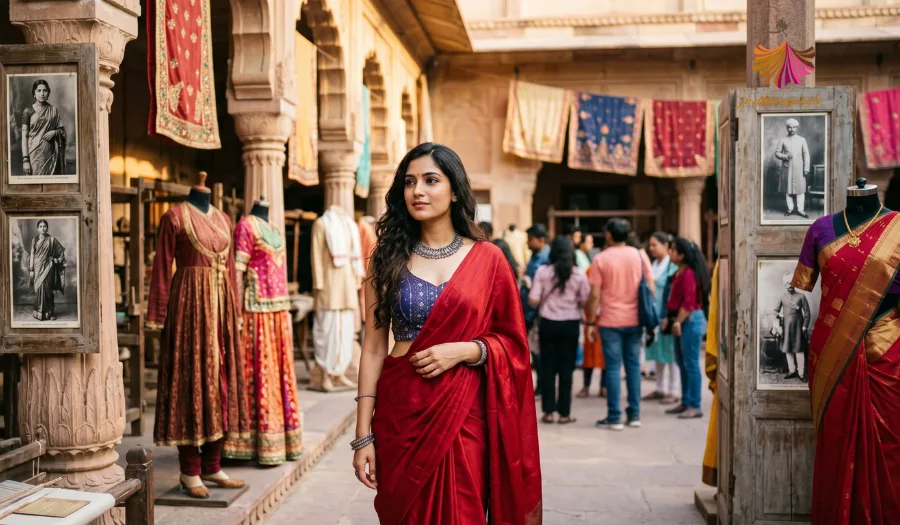
I've spent many years navigating the bustling streets of India including the tucked away handloomas in Varanasi to the posh fashion hubs of Mumbai. If people ask me "What is the background of fashion and culture in India? " I explain that it's more than just clothing. This is the story about 5,000 years of love, art as well as soul and even survival. The fashion of India is similar to a gorgeous quilt. Each thread is a story of a king, weaver or even a revolutionary. In this article, I will guide you through the ages to show how clothing evolved from basic drapes, to the global ramp walk.
The Ancient Roots: Where it All Began
The background of fashion and cultural practices in India began in the Indus Valley Civilization. About 2500 BCE our forefathers were masters at cotton. The needle wasn't used as often at the time. They were more interested in the technique of drapes.
The customary attire of India time shows that Sari as well as the Dhoti have been among of the earliest clothes to be found that exist. The reason people wore them was due to their perfect fit for the scorching Indian climate. It was easy to wear, comfortable and elegant.
Top 10 History Of Fashion Culture In India: A Quick Timeline
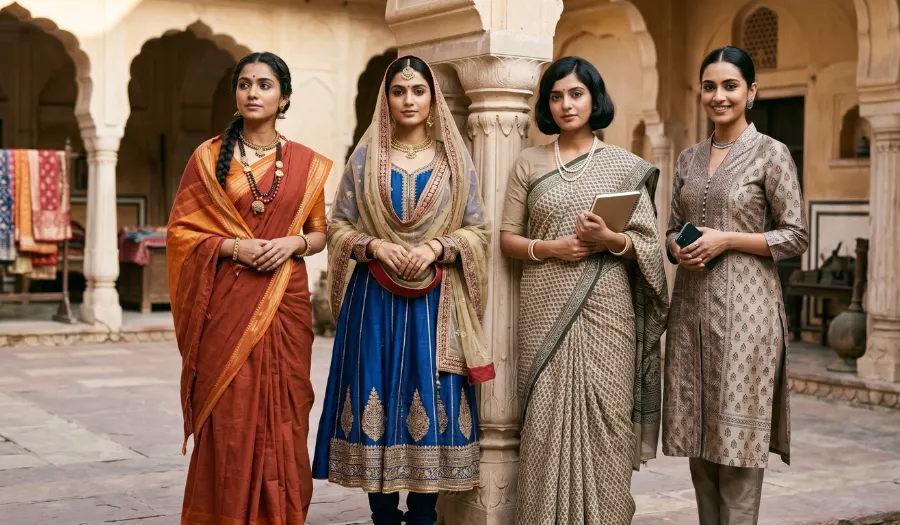
In order to help you comprehend the significant changes to come, here's a rundown of the top occasions in our journey to fashion:
- Indus Valley (2500 BCE): The beginning of the cotton weaving.
- Vedic period: Introduction of gold and silver threads into clothing.
- Mauryan Era: the use of gorgeous neckbands and waistbands.
- Mughal Empire: The first appearance of stitched clothing such as those of the Sherwani as well as the Salwar Kameez.
- The reign of Rajput Colorful and royal Lehenga Cholis with high-end jewellery.
- British Rules: The mix of Western coats and Indian Dhotis.
- Swadeshi Movement: Mahatma Gandhi creating Khadi the symbol of freedom.
- 1960s Bollywood: Modern cuts and tightly-fitting Churidars became well-known.
- 1990s: The rise of well-known Indian fashion houses and designers.
- 21st century: It's the "Indo-Western" period in which we combine everything!
How are Indian textiles made historically?
I have once had the pleasure of meeting one weaver from a remote village. He told me that "A machine runs on an engine however a handloom is the ability to beat." That's the reason why handlooms are so popular. Indian handlooms.
In the past, Indian textiles were created by using dyes made from natural sources such as minerals and plants. Handloom or powerloom? India is a hot issue today, however at the time the world was a handmade.
- Spinning Making silk or cotton thread.
- Web weaving Making use of a wooden weaver to cross threads and create cloth.
- Dyeing Utilizing indigo (blue) or turmeric (yellow) or madder (red) to create hue.
Presently today, the Indian handloom industry accounts for 90% of the world's handwoven fabric! This is an impressive figure which demonstrates the significance of fashion within Indian society.
Read also: 10 Rare Traditional Indian Clothing Female Styles
Why is traditional attire still popular in India?
It is possible to ask what the reason we wear Saris as well as Dhotis by 2026. It's simple: connection.
In India Fashion is a key element to the identity of our people. When it comes to the occasion of a wedding ceremony or celebration such as Diwali, we are able to go back to our origins. Traditional dress that is part of India culture isn't simply "old clothing." They represent honor and joy.
Evolution of Indian fashion till 21st century
When you examine the development of Indian fashion from the 20th century onwards it will show an enormous shift. Fashion in the past was a matter of class or your region. Now, it's all about personal taste.
The Shift in Women's Fashion
The development of fashion for women in India has been fascinating to observe. From the basic Mundum Neriyathum in Kerala to the fashionable "Sari-Gown." Today, women wear pantsuits at work, but wear the heavy silk sari for the family puja. That is the reason why our culture distinctive.
Traditional vs Modern Indian Fashion: The Great Mix
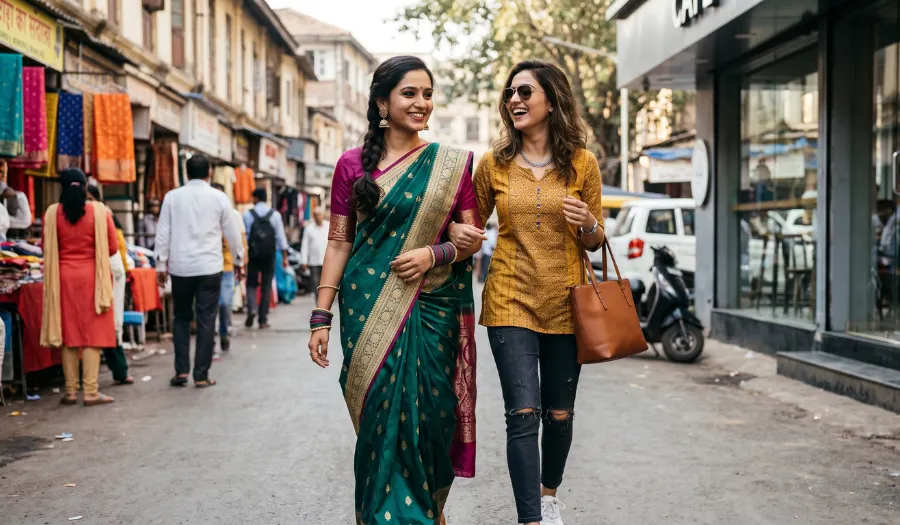
If we look at the traditional and modern Indian style there isn't any fight. There is a bond of friendship. It is referred to as "Fusion Wear."
| Feature | Traditional Fashion | Modern/Fusion Fashion |
| Style | It is pure ethnic (Sari, Dhoti) | Mix of East and West |
| Occasion | Weddings, Temples | Work, Parties, Daily life |
| Comfort | High (Draped styles) | Extremely High (Pockets and stretchy fabrics) |
There are many occasions when we see someone sporting an suit with jeans. This is a perfect illustration of the traditional vs Western clothing from India. It helps keep our souls active while easing our lives.
The Impact of Bollywood vs Traditional Fashion Influence
As a specialist in the field I can't overlook the potential that the silver screen has. Bollywood against traditional fashion influence is real.
In the 70s, everyone was looking for to wear the "Bell-bottom" pants that they watched in movies. The 1990s saw Madhuri Dixit's sari of purple in Hum Aapke Hain Koun altered the look of brides for a long time. Nowadays, actors such as Deepika Padukone, and Alia Bhatt wear traditional woven saris to appear "cool" to the young generation.
The History of Ethnic Wear in India: A Guide to Garments
If you're not familiar with this topic, here's an easy overview of the traditional Indian clothes:
- Sari The 6-9-yard rectangular cloth that can be draped more than 100 different ways!
- Salwar Kameez A long-sleeved top with loose pants, and the scarf ( Dupatta).
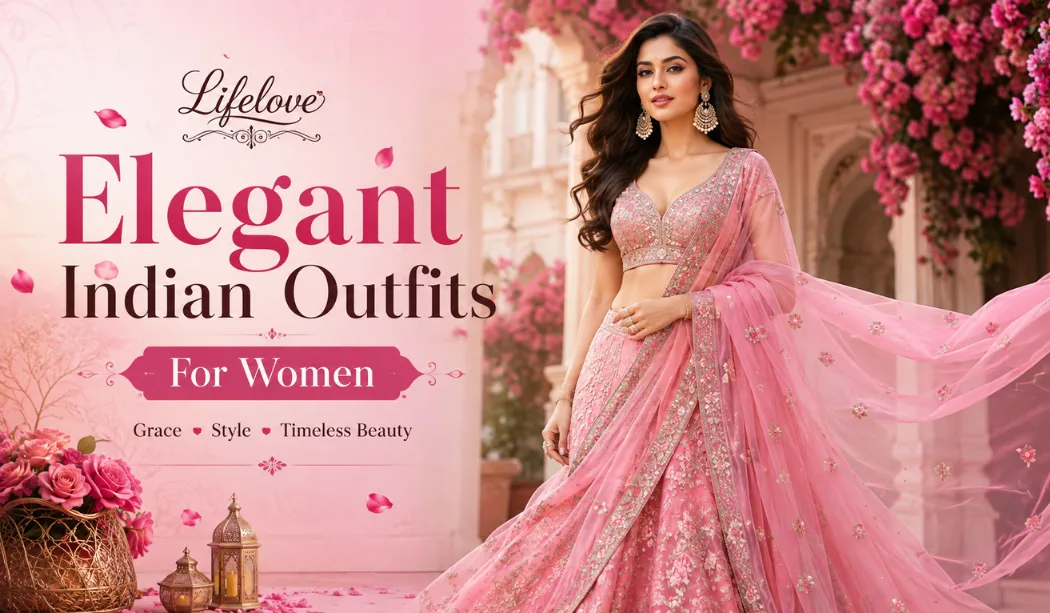
- Lehenga: A long-skirt that is paired with an oversized shirt ( Choli).
- Sherwani A royal, long coat suitable for men.
The background of ethnic clothing of India reveals that the garments have endured because they were modified according to the changing times. They can be adapted to changing conditions.
Impact of Globalization on Indian Fashion
The globalization of fashion brought brands like Zara as well as H&M in India. It also introduced Indian fashion into the global market! In the present, Indian embroidery (Zardozi) is used by international brands such as Dior as well as Gucci.
But, it is important to keep in mind our roots. Although fast fashion can be quick however, it creates an estimated 92 million tonnes waste each year across the globe. This is the reason I recommend buying a handloom whenever you have the chance. This lasts for longer and aids the local artist.
Read also: Indian Street Fashion Culture and Styles: The Ultimate Guide
Expert Quote
"Indian style isn't fashion, it's an ancestral tradition. It's not just about clothing; we put our heritage on our sleeves." -- Anish Gupta, Fashion Historian.
Frequently Asked Questions
Q1: What is the most famous Indian garment?
Sari Sari Sari is among the most well-known. It's been worn for a long time and has never gone out of fashion.
Q2: How did the British change Indian fashion?
They also introduced hemmed trousers and shirt. This was followed by the "Indo-Western" style where males began wearing coats with dhotis.
Q3 Do you think Khadi is still relevant?
Yes! Khadi is now a lux fabric. It's environmentally friendly and symbolizes the value of fashion within Indian the Indian culture as well as freedom.
Q4: What is the difference between handloom and powerloom?
Handlooms are created by hand (very specific) hand, whereas the powerloom is manufactured with machines (faster and more affordable).
Final Thoughts
The story of fashion and culture within India is a voyage of colour and bravery. From the cotton fields in the Indus Valley all the way to the international runways of 2026, Indians always have found ways to appear stunning. My suggestion? Do not be afraid to mix different things. Put on your sneakers and wear them together with your lehenga. Wear your denim jacket over your kurta. This is true to the spirit of contemporary India!