
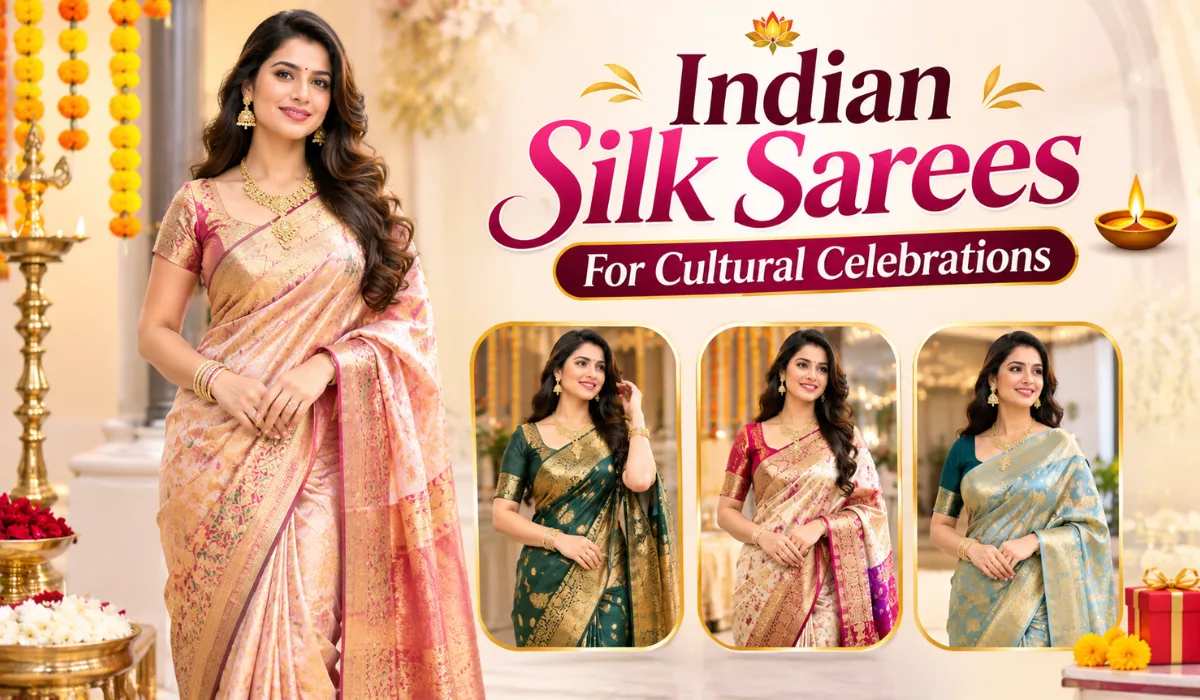
In India cultural festivities are not only celebrated with music, incense and family members together but also with the difference in texture and colors of silk that is wrapped around the body. Silk Sarees are woven by the artisans and represent a history of hundreds of years, a local identity and a symbolic significance in ritual performances. Whether it's the lively Diwali lamp-lightings, the fall Durga Puja Pandal, early morning wedding ceremonies, or harvest celebrations such as Pongal or Onam, silk is the preferred choice when it's time to pay respect, celebrate and sustain continuity. In the above picture, notice the floral border of this pink Banarasi silk saree, which is created through a wonderful process of weaving. The metallic zari thread reflects light against the luxuriant ground cloth and illustrates a method of brocade ornamentation that is woven into the fabric itself, instead of being printed upon.
Why Silk Anchors Indian Festivities and Ceremonies
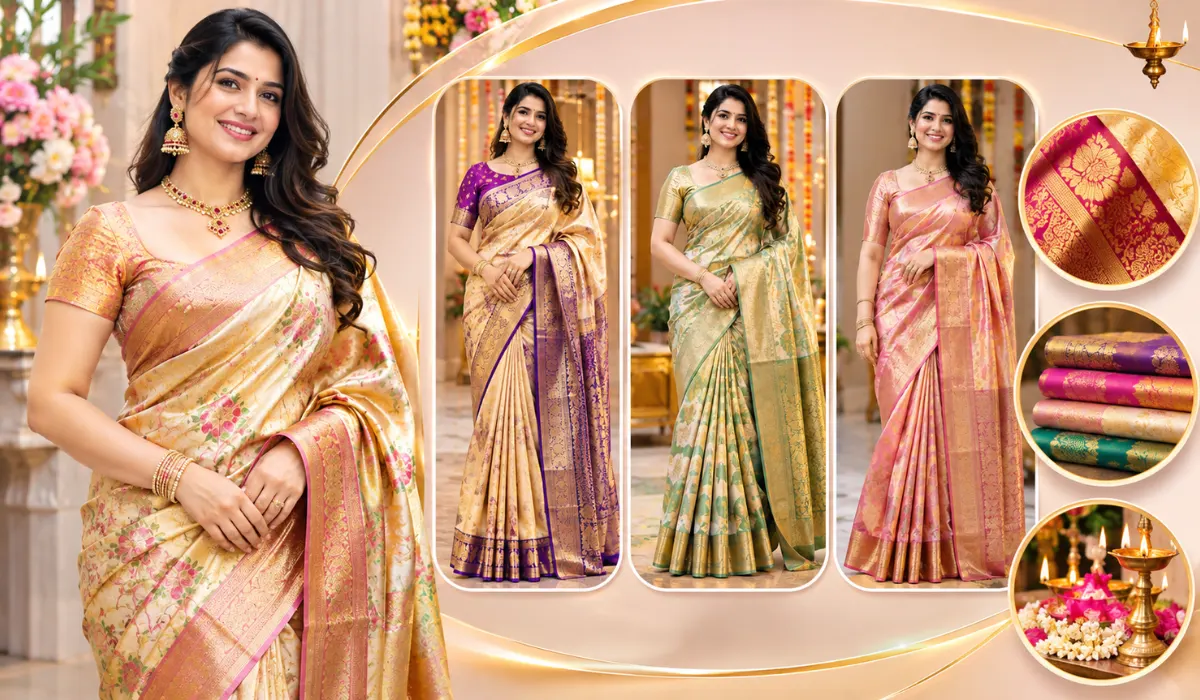
Silk is an exception in the Indian lifestyle as it gives a shiny and heavy feel which is uncommon in common cloths. In the past fine silk was valued just as precious metals were valued, and was used only for royal courts, temple offerings and major life rites. In the present times, when a silk saree is worn on an auspicious day, it represents the deep respect towards the day and craftsmen who have spent days or months weaving the loom.
The preparations are not the same and the festivities vary in pace and location, and just as much as the appearance of someone wearing a silk. Fabric that flows easily and breathes well is essential for a brisk morning prayer at a local temple, while heavy brocade or a rich zari border that can stand up and photographs well are ideal for an evening reception, under bright lights. Silk sarees are also handed down from one generation to the next, connecting a fresh event, such as a marriage, to past ones including pujas, and other important occasions.
Read Also: Modern Outfits Inspired By Indian Culture: Easy Styling Ideas
Signature Regional Silks and Their Cultural Roles
Each of the weaving localities in India started a unique visual language based on their historical, climatic and religious folklore. Instead of standard uniformed look, the regional silk ties the wearer to a craft line, or family.
The Banarasi silk of Varanasi is a popular choice for North Indian brides and for celebration purposes, blending Persian inspired floral and foliate brocade with the Indian silk and zari. Kanjeevaram weavers in Tamil Nadu utilize the technique of korvai for connecting the heavy contrast borders and also the pallu that is embellished with intricate designs and patterns with the main body of the fabric, making it durable and secure for years of use. The Patola of Gujarat is a double ikat, in which the warp and weft threads are resist-dyed before being woven together to create complex patterns. Meanwhile, Paithani of Maharashtra is known for its intricate tapestry pallus and the use of many colours, while Assamese Muga silk is known for its warm golden sheen which grows with the passage of time.
Choosing, Draping, and Caring for Celebration Silks
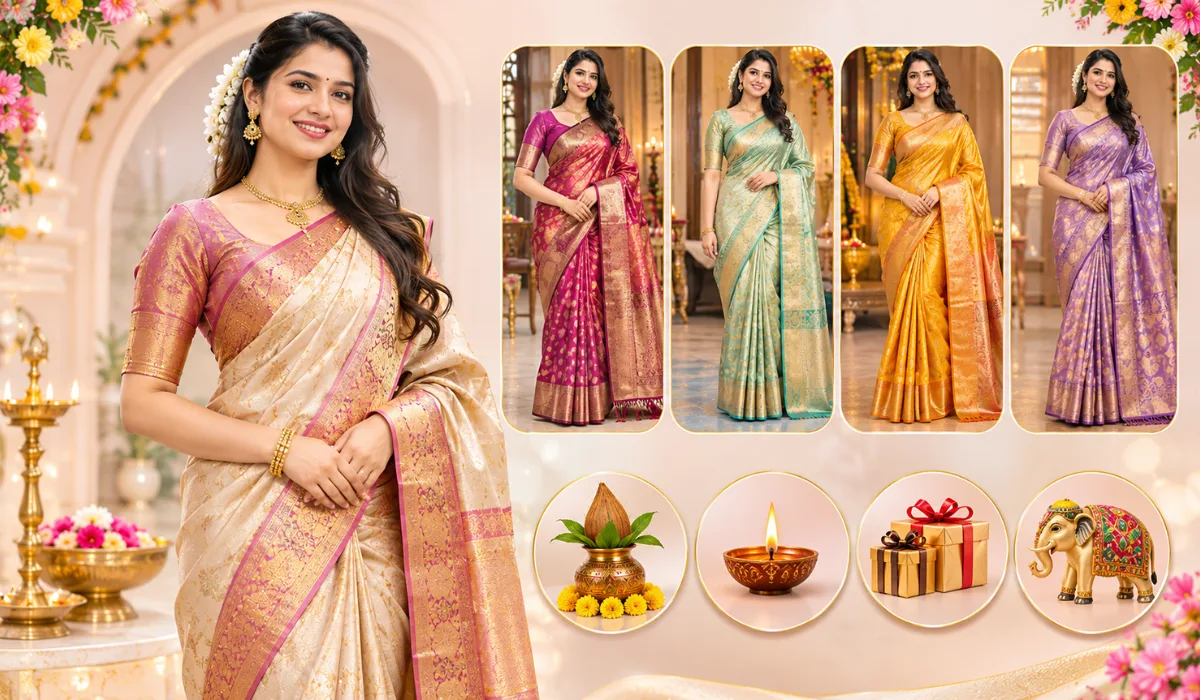
The first step towards choosing the right silk saree is the occasion you are attending and the setting. Whether it's a long day of ceremony or a hot summer day, a lighter silk drape ensures steady comfort without compromising festive presence. Heavier weaves with wide borders provide dramatic structure and timeless presence for the centerpiece wedding ritual or formal celebration.
Proof is important with investment in a celebration piece. Search for Silk Mark or Handloom Mark and, if present, for Geographical Indication; and of course look for the weave for its subtle sense of human craftsmanship rather than machine uniformity. Please try the blouse with the petticoat before the event as you need to see how the pleats are falling and how the pallu is hanging over your shoulder.
Once the celebration is over, the silk is protected for many, many years. After wearing, let the saree air dry: When storing, wrap it in a clean cotton/muslin cloth and keep it away from direct sunlight and moisture: Fold it along fresh folds every couple of months to ensure that the crease is not putting pressure on the same set of silk strands. Signing in to a Google Account while you are browsing can also help you save notes and return to helpful guides later on a signed-out session.
Read Also: Fusion Saree Styling For Modern Women: Trendy Ideas And Looks
Frequently Asked Questions About Indian Silk Sarees
What makes a handloom silk saree different from a power-loom silk saree?
Weaving is done by hand using silk yarns, resulting in a natural variation in texture which still enables the artisans to produce silk in traditional weaving clusters. Power-loom fabric is made using motorized machinery, is quicker to make and cheaper, but is less artisanal than hand loom.
Which silk saree is best for a full day of wedding or festival functions?
A lighter silk, with a more manageable weight and drape, is typically easier to wear for prolonged periods of time, when greeting guests, and sitting through rituals. For core ceremonies and portraits, heavier bridal silks will be dazzling, however many individuals switch or select lighter silks for lengthier parties.
How do Banarasi and Kanjeevaram silk sarees differ in style?
The intricate brocade designs, floral motifs, and delicate zari embroidery are unique to Banarasi sarees and are frequently found in flowing drapes. Kanjeevaram sarees are known for their robust and thicker silk fabrics, temple or traditional designs with interlocking borders, and borders that are usually in contrasting colors.
How should I store a silk saree between cultural celebrations?
Ensure the saree remains cool, dry and in the shade by wrapping it in a porous cloth like cotton or muslin and not plastic. Fold it from time to time along the new fold lines to prevent weakening fibers at one fold line with constant pressure.
How can I tell if a celebration silk saree is genuine?
Look for government certification such as Silk Mark or Handloom Mark, inquire about the type and origin of the yarn, and purchase from established sellers or weaver cooperatives. Browsing the weave and zari finish before buying helps to stay away from synthetic lookalikes.